
Two seasons, two salt flats
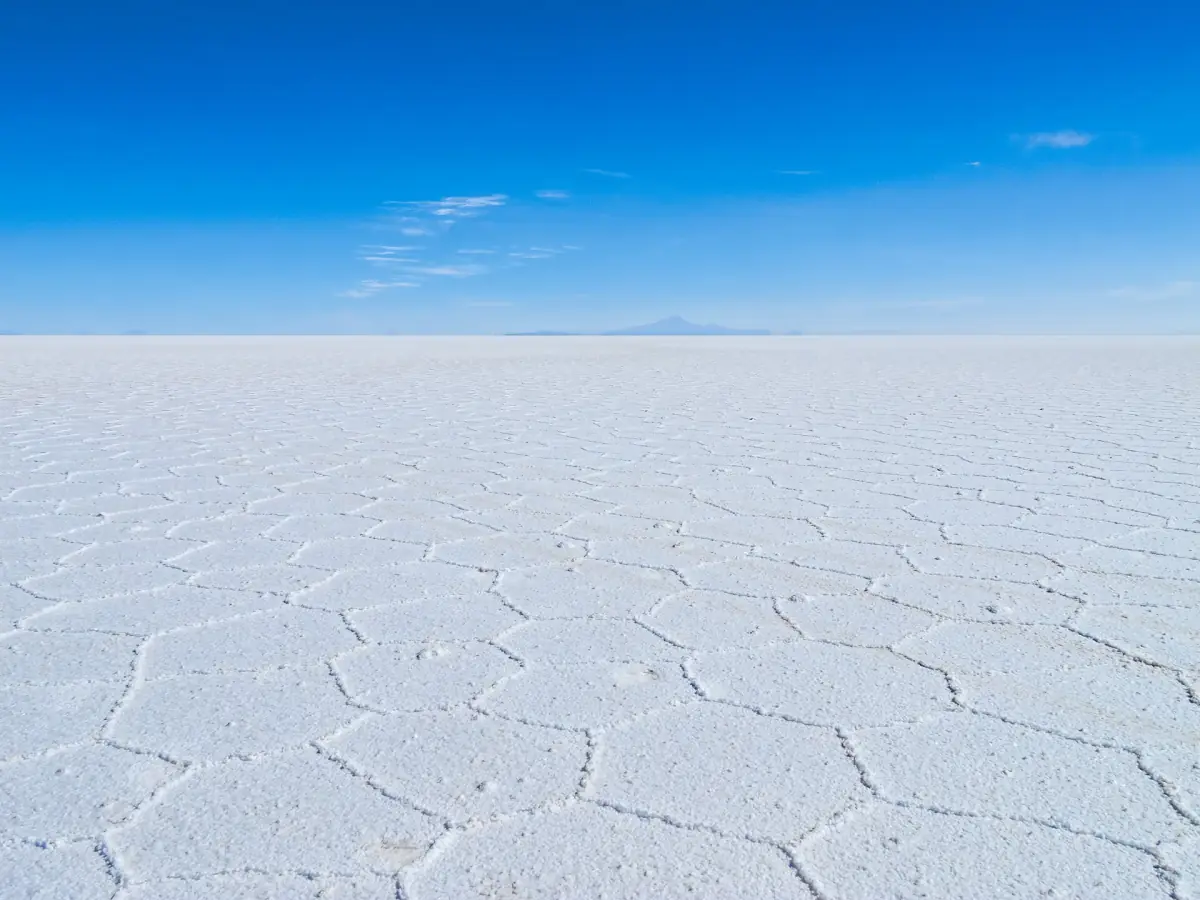
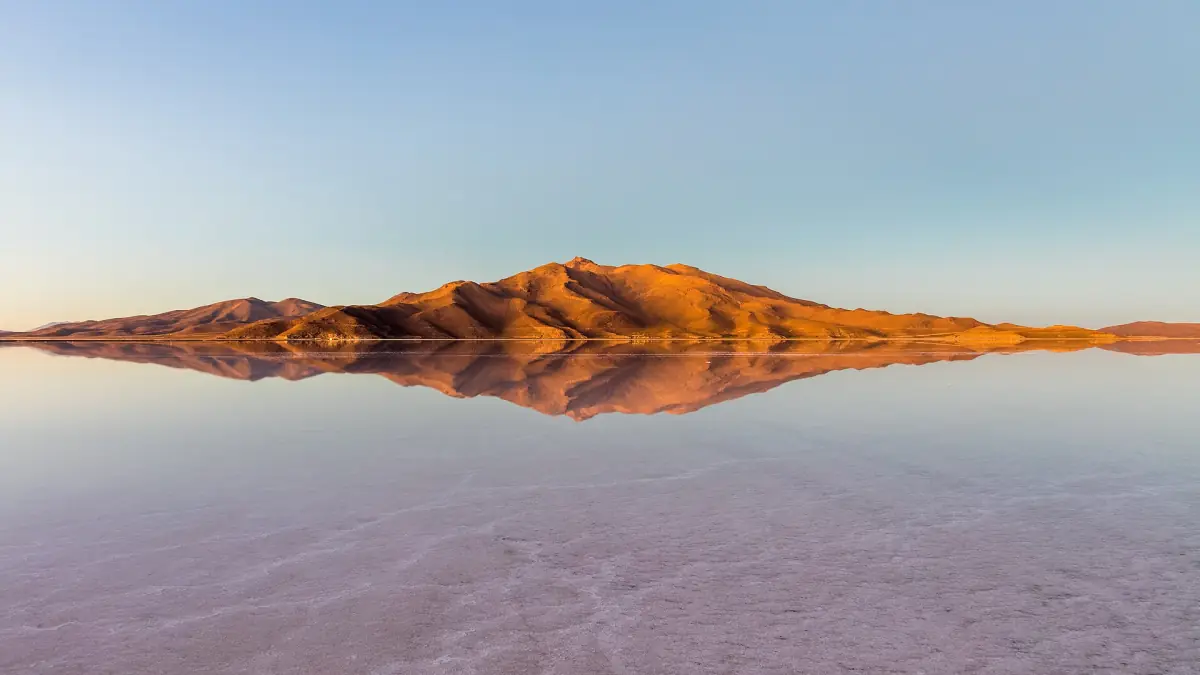
Rain falls mostly from December to March. Some operators set the rainy season from late December to mid April. In those months a thin layer of water can turn the salt flat into a mirror. The dry season usually runs from April to November, with a dry crust, hexagon salt patterns and fewer route changes.
The nights decide how cold it feels. From May to August the average low is below freezing, and July is the coldest month in the table below. Days are mild by comparison. Whichever season you pick, you can compare Uyuni salt flat tours and the 3-day tour for the dates you have in mind.
Uyuni month by month
Average daily high and low in °C and rainfall in mm.
| Month | High | Low | Rain | What it means |
|---|---|---|---|---|
| January | 20.7 | 4.9 | 73.6 | Wettest month, mirror possible, island stop may be dropped |
| February | 20.4 | 4.2 | 54.8 | Rainy season, mirror possible, island stop may be dropped |
| March | 20.4 | 3.0 | 13.0 | End of the main rain months, island stop may be dropped |
| April | 18.4 | −1.8 | 2.1 | Transition, first freezing nights |
| May | 14.8 | −7.4 | 1.6 | Dry season begins, cold nights |
| June | 12.4 | −10.3 | 0.1 | Dry and cold, sleeping bag advised |
| July | 12.4 | −11.7 | 2.4 | Coldest nights in the table |
| August | 14.9 | −9.4 | 0.0 | Dry, nights still very cold |
| September | 16.1 | −6.6 | 0.0 | Dry, days warming up |
| October | 19.1 | −3.3 | 0.0 | Dry, nights easing |
| November | 21.0 | −0.5 | 5.6 | First rain returns |
| December | 21.4 | 2.6 | 21.0 | Rainy season starts, nights above freezing |
These are long-term averages. Use them as a guide, not as a forecast. Each low is a monthly average of the nightly low. Single nights can be colder, so pack for more than the average. A month with 0.0 mm in the table does not guarantee a dry trip.
Uyuni Salt Flat tours for your travel dates
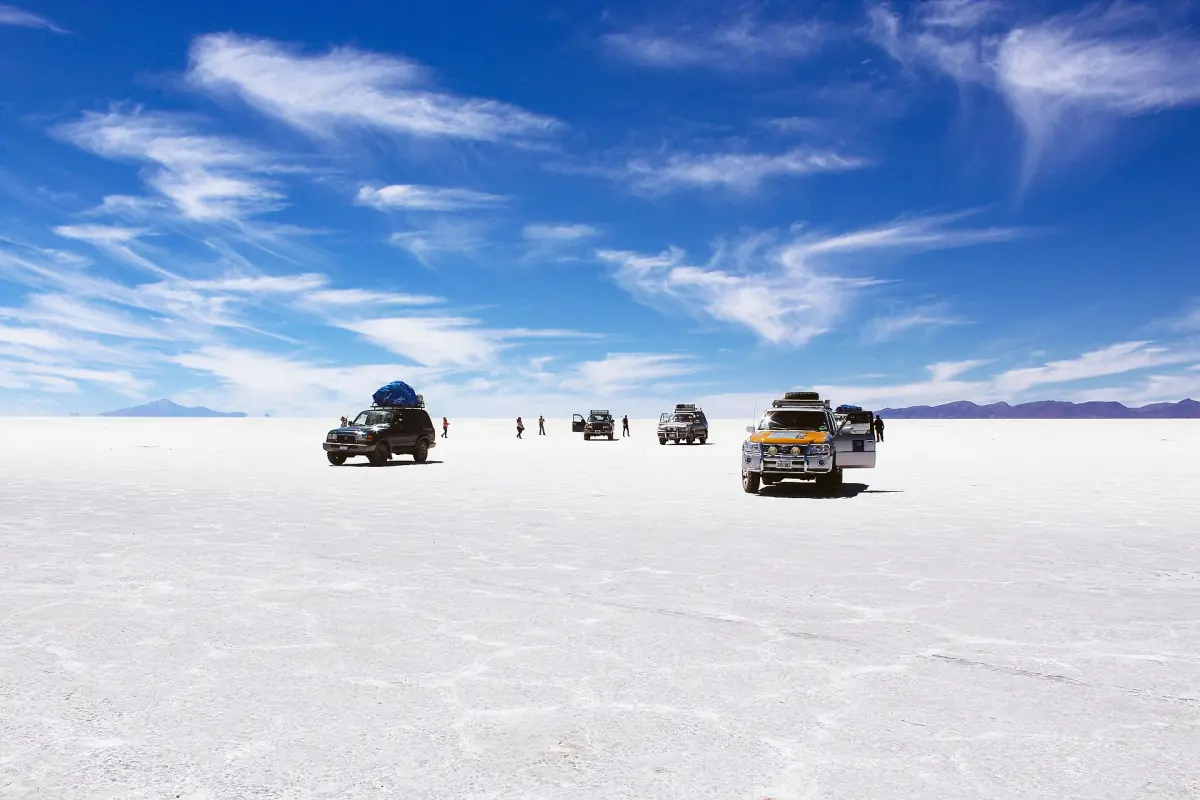
Day trips, 3-day jeep tours and trips from San Pedro de Atacama, with current prices and availability.
Which season for which plan
The best month depends on what you want to see.
| Goal | Season | Good to know |
|---|---|---|
| Mirror and reflections | December to March, or late December to mid April | Not guaranteed in any month. Mirror effect explains why |
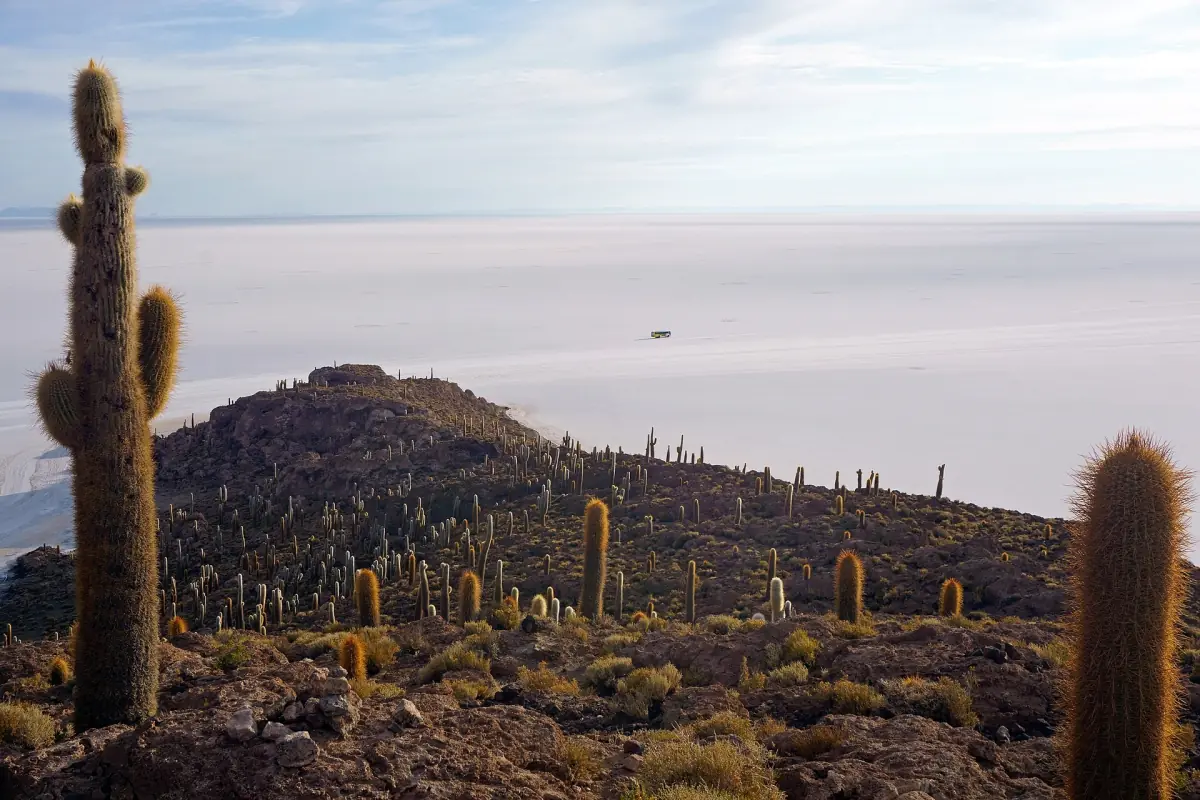
| Incahuasi Island and long routes | Dry season, April to November | The island visit can be replaced by mirror photos when the salt flat is flooded. See Incahuasi Island |
| Milder nights | December to March | Average lows of 2.6 to 4.9 °C, but these are also the wet months |
| Lagoons and the 3-day route | Any season | Overnight stops reach about 4,300 m, so nights are colder. See Laguna Colorada |
For most first-time visitors who want the island and the full route, the dry season is the safer choice, as long as you pack for freezing nights. If the reflection is the reason you are going, choose the wet months and accept that the island may be skipped.
Planning around the weather
What the season changes in practice.
Cold
Pack warm layers, a windbreaker and a change of clothes. A sleeping bag is advised in winter, and one 3-day offer does not include room heating. The packing list has the details.
Altitude
The salt flat lies at roughly 3,600 m, and the lagoon stops are higher. Season does not change that. Read about altitude before you go and speak to a doctor ahead of the trip.
Roads and snow
In winter, snow can close roads, including the road from Potosí to Uyuni. Travel advice for Bolivia warns of short-term road blockades. Check the road situation before each leg and prefer flexible bookings. The getting there page covers the routes.
Evenings
A sunset stop can be part of a day tour in any season, and the look depends on the sky. See sunset and stars.
Plan the rest of your trip
Pages that go with your season.
Best time to visit Uyuni: frequently asked questions
What is the best month to visit Uyuni?
That depends on the goal. For the mirror, the wet months from December to March. For the island, long routes and dry crust, the dry season from April to November. No month suits every plan.
When is it coldest in Uyuni?
June to August. The average low in July is −11.7 °C in the table above, and single nights can be colder. Days are milder, with average highs of 12.4 to 14.9 °C.
Which months get the most rain?
January with 73.6 mm and February with 54.8 mm, followed by December with 21.0 mm. These are long-term averages, so treat them as a guide.
Can I see the mirror in February?
February is in the rainy season, so water can be on the surface. It is a possibility, not a promise, and the island stop may be dropped in the same months.
Are the temperatures in the table a forecast?
No. They are long-term averages, not a forecast. Check a current forecast a few days before you travel.
Is this the official site for visiting Uyuni?
No. This is an independent travel guide. It is not run by a tourism authority, the reserve service, a hotel or a tour operator.